







































































































































































7 Nature Walk Benefits for Beginners: Simple Ways to Improve Health
BY RVLNSV PRASAD, a wellness writer who writes on healthy habits, nutrition, and practical improvements to living.
This article is a blend of practical experience, proven health research, and evidence-based knowledge.
Introduction
Nature Walk Benefits for Beginners is gaining popularity as many are seeking a simple way to stay healthy. Gyms are not for everyone. and not everyone can adhere to a strict workout routine. Most people simply want more energy, less stress, and a healthier everyday lifestyle.
A few years ago, I spent most of my days indoors. I sat in front of a computer for long stretches of time. But in the evening, I often felt fatigued and mentally drained.
One day I went for a walk at a nearby park. I wasn’t trying to lose weight or do a fitness challenge. I simply needed some fresh air and a break from the screens.
At first, it seemed like a small thing. Then something changed.
After a few weeks I felt more peaceful. My body was no longer tense. Sometimes I slept better. Those quiet walks become one of my favorite parts of the day.
I learned a valuable lesson from that experience: healthy behaviors don’t have to be difficult.
Sometimes, a simple walk in nature can make a big difference. That experience helped me realize why spending time outdoors is such an important part of a healthy and balanced lifestyle.
This review identified links between exposure to nature and improvements in mental health, physical activity, sleep, cognitive performance, and blood pressure. Associations Between Nature Exposure and Health (NIH Study)
Why Nature Walk Benefits for Beginners Matter More Than Many People Think
Modern life keeps people indoors for most of the day. Work is often the main reason for such behavior. Sitting long hours in the office and in front of computers leaves little time to spend outdoors.
Phones and laptops can take up a lot of our time. With traffic, busy schedules, and daily responsibilities, it can be difficult to go outside. Over time, people may become less active and spend less time enjoying the fresh air and natural surroundings.
Such inactivity can affect both your physical and mental well-being.
Health experts from Mayo Clinic, Harvard Health and NIH recommend regular physical activity as part of a healthy lifestyle.
Walking is one of the simplest exercises. You can get started without specific equipment or a gym membership.
You can begin almost anywhere. Nature walks offer more than just physical activity.
You get fresh air, take a break from screens, and give yourself time to slow down and relax.
People can feel calmer and less anxious when they are around trees, plants, and open areas. One reason nature walks have become such a popular wellness routine.
Read: Daily Healthy Stress-Relief Habits
Related: Mental Health Benefits of Morning Walks
See Also: Daily Holistic Wellness Routine for Beginners
1. Nature Walks Help You Move More Without Feeling Like Exercise
Many beginners struggle with traditional workouts. Gyms can feel intimidating, and high-intensity fitness routines might be scary. Nature walks are just different.
Instead of focusing on exercise, many individuals simply enjoy being outdoors. Movement becomes part of the experience.
Benefits of walking in nature may include the following:
- More daily movement
- Improved circulation
- Better mobility
- Increased energy levels
- Greater consistency with physical activity
One of the biggest advantages is sustainability. Walking is one of the healthiest and easiest habits to maintain.
Most workout programs start to feel challenging after a few weeks. Walking typically feels more natural. That is why many folks stick with it for a longer period of time.
2. You Could Be Less Stressed When You Are Outside
Stress is a part of everyday existence.
Work obligations, family duties, and regular phone notifications can make people feel stressed and fatigued.
Sometimes the brain needs a break. Nature is a calmer place.
A walk in a park, garden, or trail frequently seems different than staying indoors all day. Many people report they feel more relaxed when they get outside.
Simple things during a walk can help you relax:
- Take a couple slow inhales
- See trees and flowers
- Hear the birds sing
- Don’t use your phone when walking
These few moments can calm your head. I’ve seen it with my own eyes. Some of my best walks were on stressful days.
The difficulties did not go away. But I felt better able to handle them.
Greenspace and mental health research (NIH):
The Importance of Greenspace for Mental Health (NIH)
Research indicates that access to green space can benefit mental health and help to reduce stress at a population level
American Psychological Association:
APA examines studies that connect exposure to nature with reduced stress, increased mood and enhanced focus
3. Nature Walks Can Be Good for Your Heart Health
Walking is typically suggested as a beginner’s exercise because it is basic and easy on the body.
No particular talents are required. You can start at your own speed.
Health experts from Mayo Clinic and Cleveland Clinic frequently encourage daily walking as part of a healthy lifestyle.
Potential benefits include the following:
- Enhanced blood flow
- Increased stamina
- Supports healthy blood pressure
- Enhanced overall health
You don’t have to walk fast. You don’t have to walk for hours.
Even a short stroll, if done regularly, can help. Consistency is more important than speed.
Mayo Clinic Walking Guide:
Walking: Trim Your Waistline, Improve Your Health (Mayo Clinic)
Walking can help improve heart health, endurance, and general fitness, says the Mayo Clinic.
Cardiovascular Walking Research:
Walking – The First Steps in Cardiovascular Disease Prevention (Peer-Reviewed Study)
There is evidence that walking is connected with cardiovascular health advantages in different age groups
4. Going for a Walk Outside Can Help Boost Your Mood
Many people experience emotional alterations prior to physical ones, and it was true of me too.
When the workload was heavy, I would often feel mentally fatigued. I went for a short walk outside to reset.
My troubles were still there. But they were easier to handle afterwards.
A beginner walking routine may include the following:
- Improved mood
- Less stress
- Better focus
- Greater sense of peace
Scientists are still exploring the effects of nature on mental health. Results will vary from person to person. Many individuals report feeling happier and more relaxed after being outside.
Harvard School of Public Health:
Time Spent in Nature Can Boost Physical and Mental Well-Being (Harvard)
Harvard has identified linkages between exposure to green spaces and enhanced physical and emotional well-being.
Green Space and Mental Health Review:
Green and Blue Space and Mental Health (NIH
Reviews suggest that green space exposure can enhance wellbeing and act as a buffer against stress.
5. Nature Walks Could Promote Other Healthy Behaviors
Good habits lead to other positive habits. I’ve seen this pattern in my own life over the years.
Once I started walking frequently, I paid more attention to other areas of my health.
Some simple behaviors to follow are:
- Increasing water intake
- Going to sleep earlier
- Cutting down on screen time
- Being more activity during the day
Outdoor walking benefits can be a part of a healthy daily routine. It’s generally easier to make small improvements than to try to alter everything at once.
Harvard Exercise and Fitness Hub:
Exercise and Fitness Resources (Harvard Health)
Regular physical activity can help you feel better, sleep better and live longer, says Harvard.
6. Nature Walks Can Help With Balance And Mobility
Moving around helps your body feel better. This aspect is even more crucial as we become older. Many walking trails have slight inclines, twists and turns, and varying surfaces.
Little hills, uneven surfaces, and gentle curves are characteristic of natural walking trails. These features can improve your balance and coordination over time.
Nature Walk Tips for Newbies
- Wear good shoes
- Begin with short walks
- Pick safe areas to stroll
- Walk at a pace that is comfortable
- Take a break if you needed to
No need to hurry. Everyone has to start somewhere. The emphasis should be on the habit of walking, not on walking longer distances.
Great changes over time are often the result of small measures taken frequently
Mayo Clinic Exercise Guidelines:
Exercise: How Much Do I Need Every Day? (Mayo Clinic)
Even small amounts of activity can lead to health benefits.
7. Nature Walks Can Become a Sustainable Long-Term Wellness Habit
Many wellness trends are short-lived. Walking remains one of the most practical habits people can maintain.
Outdoor walking benefits often come from repetition rather than intensity.
A regular ten-minute walk may provide more long-term value than an ambitious routine that lasts only a few days.
One lesson I learned personally was that consistency usually beats motivation. Motivation changes. Simple habits often last.
Research and Expert Opinions on Walking in Nature
For decades, health professionals have studied walking. They continue to study the effects of movement and time spent outside on overall health.
Many organizations, like Mayo Clinic, Cleveland Clinic, NIH, Healthline, and Harvard, to name a few, regularly promote regular physical activity as part of a healthy lifestyle.
The Health Benefits of the Great Outdoors (Systematic Review)
Researchers are particularly interested in some of the following areas:
- Physical wellness
- Psychosocial health
- Stress reduction
- Heart health
- Healthy aging
The results are not identical. People have varied fitness, lifestyle, and health needs. But one thing remains the same.
Walking is the easiest activity for most novices to start and stick with. It does not need specific talents. You don’t need pricey equipment.
That’s one reason health experts keep recommending it.
Typical Mistakes Beginners Make When Starting Nature Walks
I’ve seen many folks make the same mistakes when starting a new walking routine. That was a mistake I used to make occasionally.
Typical examples include the following:
- Wanting rapid results
- Walking too far on first day
- Wearing bad shoes
- Not drinking enough fluids.
- Comparing their progress to others
Many folks start with a lot of enthusiasm.
And then they try to do too much, too quickly. A better approach is generally simpler. Begin with a short walk.
Add a bit more time when you feel comfortable. Continue even when you don’t feel motivated. Small steps create lasting habits.
Personal Experience: What Nature Walks Have Taught Me About Well-being
When I started walking, I expected to see immediate benefits because I thought I would feel entirely different in a week.
Also, I had thought longer walks would inevitably yield better outcomes. But it didn’t happen. The first changes were rather minor
One day I found I was more focused. A few weeks later I was less stressed after work. So I began to walk regularly.
In hindsight, that was the biggest lesson I learned. Good habits often build up gradually.
Most positive transformation occurs in silence. You may not see it at first. Then one day you find you feel better than you did a few months earlier.
That’s how real wellness usually works. I first noticed better focus. Then I started feeling less stressed.
That’s when I started walking and found I liked it. It wasn’t just another thing on my to-do list anymore. It was something I began to look forward to each day.
I learned my lesson from that event. Good health usually doesn’t come from making one huge change.
Often, it’s the simple habits repeated day after day.
How to Walk in Nature for Beginners
No need for a complicated plan. It’s easy to get started with just a couple of steps.
Morning
- Have a glass of water
- Take a 10-minute walk
- Spend a little time out in natural sunlight
Afternoon
- Walk around for a few minutes.
- If you can, go outside.
Nighttime
- Take a leisurely stroll
- Spend less time in front of screens
- Allow yourself time to relax
Simple routines are usually easier to maintain. The point is not to be perfect. The aim is consistency.
Beginner Nature Walkers’ Safety Tips
A few things to keep in mind before you set out.
- Wear comfortable footwear
- Take water with you
- Put on sunscreen as needed
- Choose safe walking paths
- Begin with short distances
No need to hurry. Walk at a comfortable speed.
If you have a medical condition, injury, or physical limitation, see a healthcare professional before beginning a new activity.
How Much Walking Should Beginners Do?
Week Daily Target
Week 1: 10 minutes
Week 2— 15 min
Week 3— 20 mins
Week 4—25 to 30 minutes
Sources
Mayo Clinic. “Walking: Trim Your Waistline, Improve Your Health.”
Mayo Clinic. “The Mental Health Benefits of Nature: Spending Time Outdoors to Refresh Your Mind.”
National Institutes of Health (NIH). “Green Space May Improve Young Children’s Mental Health.”
National Center for Biotechnology Information (NCBI). “Green and Blue Space and Mental Health.”
Conclusion
Nature walk benefits for beginners often start with simple steps rather than major lifestyle changes.
You do not need expensive equipment. You do not need intense workouts.
A short walk outside, fresh air, and a few quiet moments can become the foundation of healthier daily habits.
Those small walks may not seem important today. Months later, they may become one of the healthiest parts of your routine.
Medical Disclaimer
This article is for educational purposes only and does not replace professional medical advice. Speak with a healthcare professional before making health changes.
Frequently Asked Questions
1. Can nature walks be better than gym workouts?
They serve different purposes.
Nature walks can offer gentle full-body benefits and stress relief.
2. Can older adults benefit from nature walking?
Yes.
This is one of the safest activities for older adults.
3. Do short walks still help?
Yes.
Even a ten-minute walk can support circulation and movement.
4. Is walking on flat ground enough?
Yes.
Any natural movement can help.
5. Can nature walks help chronic conditions?
The evidence suggests they can assist with healing. joint and heart health.
Often consult a doctor.
6. What if I live in a city?
Parks, green streets and trees still help
Nature does not require being wild.
7. Should I walk alone or with others?
Both are fine.
Choose what feels safe and enjoyable.
Medical Disclaimer
This text is for educational purposes only and is not a substitute for professional medical advice. Before making changes to your health, talk to a healthcare professional.
Related Content:
- 8 Rapid Hair Growth Herbals You Should Try
- 15 Ayurvedic Remedies for High Blood Pressure
- Aromatherapy for Stress Relief and Relaxation: A Comprehensive Guide
- Natural Remedies for Boosting Immunity with Plants: A Comprehensive Guide
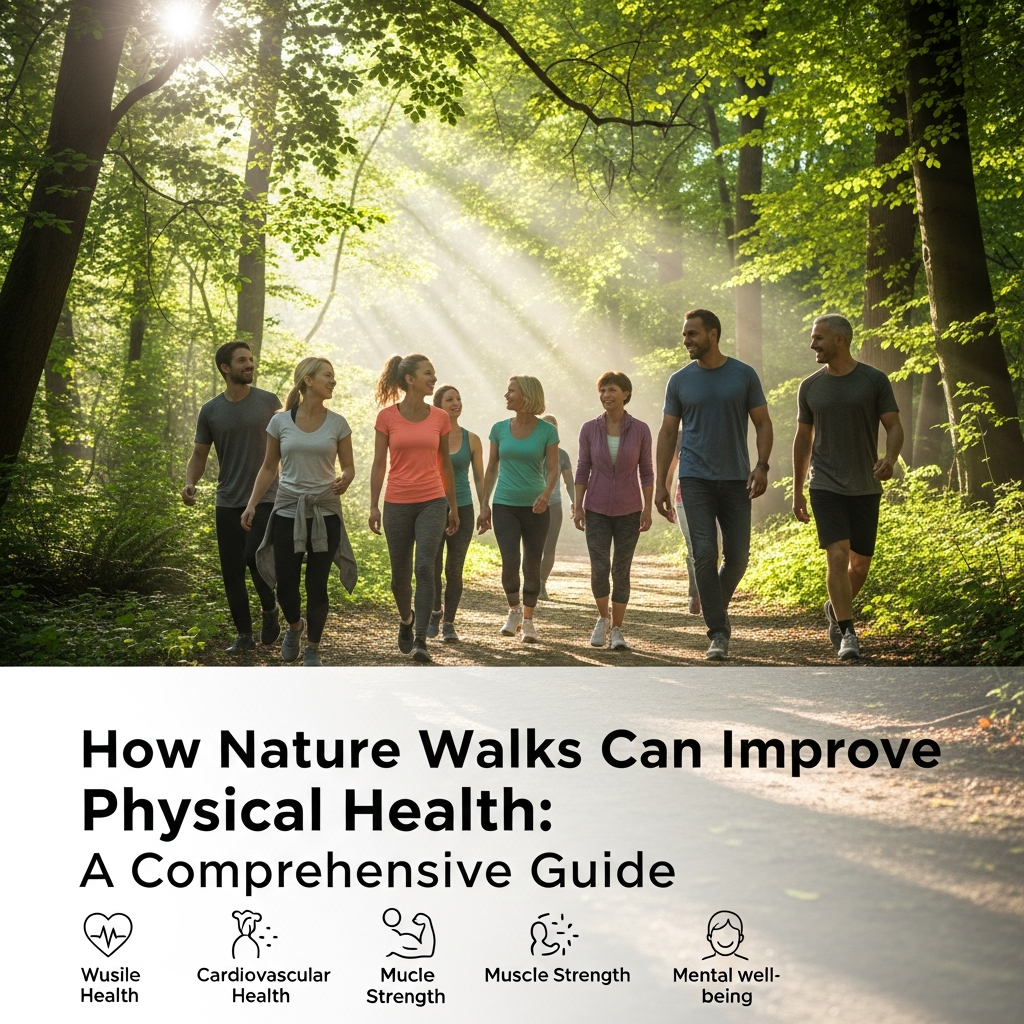
- How Nature Walks Can Improve Physical Health: A Comprehensive Guide
- 7 Healing Herbs for Boosting Energy Naturally: A Comprehensive Guide
- Benefits of Outdoor Activities for Mental Health: A Comprehensive Guide
- Best Superfoods Revealed: Truth Behind Nutrient Powerhouses
- Check our Blog and Category page (Nature’s & Healing)
- How to Achieve Balance Holistic Wellness Practices
- 22 Natural Remedies for Anxiety: What Really Works?










[…] How Nature Walks Can Improve Physical Health: A Comprehensive Guide […]
[…] How Nature Walks Can Improve Physical Health: A Comprehensive Guide […]
[…] How Nature Walks Can Improve Physical Health: A Comprehensive Guide […]
[…] How Nature Walks Can Improve Physical Health: A Comprehensive Guide […]
[…] How Nature Walks Can Improve Physical Health: A Comprehensive Guide […]
[…] How Nature Walks Can Improve Physical Health: A Comprehensive Guide […]
[…] How Nature Walks Can Improve Physical Health: A Comprehensive Guide […]
[…] How Nature Walks Can Improve Physical Health: A Comprehensive Guide […]
[…] How Nature Walks Can Improve Physical Health: A Comprehensive Guide […]
[…] How Nature Walks Can Improve Physical Health: A Comprehensive Guide […]
[…] How Nature Walks Can Improve Physical Health: A Comprehensive Guide […]
[…] How Nature Walks Can Improve Physical Health: A Comprehensive Guide […]
[…] How Nature Walks Can Improve Physical Health: A Comprehensive Guide […]
[…] How Nature Walks Can Improve Physical Health: A Comprehensive Guide […]
[…] How Nature Walks Can Improve Physical Health: A Comprehensive Guide […]
[…] How Nature Walks Can Improve Physical Health: A Comprehensive Guide […]
[…] How Nature Walks Can Improve Physical Health: A Comprehensive Guide […]
[…] How Nature Walks Can Improve Physical Health: A Comprehensive Guide […]
[…] How Nature Walks Can Improve Physical Health: A Comprehensive Guide […]
[…] How Nature Walks Can Improve Physical Health: A Comprehensive Guide […]
[…] How Nature Walks Can Improve Physical Health: A Comprehensive Guide […]
[…] How Nature Walks Can Improve Physical Health: A Comprehensive Guide […]
[…] How Nature Walks Can Improve Physical Health: A Comprehensive Guide […]
[…] How Nature Walks Can Improve Physical Health: A Comprehensive Guide […]